At a Glance

Canvas calendar events are NOT automatically created. Teaching teams must create and manage these events using the instructions below.

You can create:

  • One-time events (recitations, office hours, review session, final exam)
  • Recurring events (all your class sessions across the term)

In this guide for teaching teams, you’ll learn how to add and manage calendar events in your course in Canvas.

IMPORTANT: Always select Use a different date for each section when creating course calendar events in Canvas. Even if your course has only one student section, Sloan Canvas sites also include a Teaching Staff section.

This setting ensures that students only see the calendar events for their own section, and you avoid issues later when importing sessions into A+ Attendance.

Why Calendar Events Matter

Students rely on the Canvas calendar to know when and where their classes meet, so it’s important to keep your course calendar accurate.

When you add events to your course calendar:

Before Creating Calendar Events for Your Class Sessions

Step 1: Check How Many Sections Are in Your Canvas Site

  1. In your Canvas site, click on Membership in the Course Navigation Menu.
  2. Look at the Sections column and note how many sections are listed (for example, Section A, Section B).

The number of student sections in your Canvas site determines how many recurring events you’ll need to create in Step 2.

Note: Every Sloan Canvas site includes at least one student section plus a Teaching Staff section for instructors, course admins, and TAs.

Step 2: Plan Your Recurring Events

You’ll need to create one recurring calendar event for each section on each day the class meets. This means:

  • If your Canvas site has multiple sections: Create a separate recurring event for each section.
  • If a section meets on multiple days each week: Create a separate recurring event for each day.

Examples

  • One section, meets once per week
    • Example: Section A meets Tuesdays from 1:00–3:30 PM
    • Create: 1 recurring event
  • One section, meets twice per week
    • Example: Section A meets Mondays and Wednesdays from 8:30–10:00 AM
    • Create: 2 recurring events (one for Monday, one for Wednesday)
  • Two sections, each meets twice per week
    • Example:
      • Section A meets Mondays and Wednesdays from 8:30–10:00 AM
      • Section B meets Tuesdays and Thursdays from 8:30–10:00 AM
    • Create: 4 recurring events:
      • One for Section A on Monday
      • One for Section A on Wednesday
      • One for Section B on Tuesday
      • One for Section B on Thursday

Tip: When creating recurring calendar events for your class sessions, remember to select the: (1) Use a different date for each section checkbox; and (2) the Duplicate event checkbox to add the remaining class dates for the term.

Step 3: Review the Recommended Naming Format

Recommended Format

Course number – Event type – Term and year

Examples

  • 15.927 – Class Session – Spring 2026
  • 15.927 – Recitation – Spring 2026
  • 15.927 – Office Hours – Spring 2026
  • 15.927 – Final Exam – Spring 2026

Why use this format?

  • Course Number: Helps students quickly identify which course the event belongs to, especially if they are enrolled in multiple courses. This also aligns with MIT Sloan Gold Standards.
  • Term and Year: Makes it easy to filter out old calendar events in A+ Attendance if they’re accidentally copied to a future Canvas site.

IMPORTANT: Do NOT add section information to the calendar event title. When you select Use a different date for each section, Canvas automatically adds the section name at the end of each calendar event. For example: 15.927 – Class Session – Spring 2026 (Section A)

Step 4: Review the Setup Tips

  1. Use a consistent naming format.
    • Follow the recommended format above.
    • Consistent naming makes it easier to identify and import only the correct class sessions into A+ Attendance.
  2. Do NOT add section information to the event title.
    • When you select “Use a different date for each section,” Canvas automatically adds the section name at the end of each calendar event.
  3. Always select the “Use a different date for each section” checkbox.
    • Even if your course has only one section of students, Sloan Canvas sites also include a Teaching Staff section. Selecting this option prevents issues when importing class sessions into A+ Attendance.
  4. When creating recurring calendar events for your class sessions, select the Duplicate checkbox.
    • This option lets you add your class sessions to your Course Calendar in bulk.
  5. Do NOT include Zoom meeting information in the calendar event.
    • Students should access Zoom meetings by clicking on Zoom in the Course Navigation Menu in your Canvas site. This ensures they have the correct link and are properly authenticated into the meeting.
  6. Review all session dates in the Syllabus tool after creating events.
    • The Syllabus page shows all deliverables (such as assignments) along with events in a single list, making it easy to spot missing or incorrect class sessions.
    • We recommend reviewing this list before importing your class sessions into A+ Attendance.

Tip: If calendar events are created incorrectly, you’ll need to manually delete them and recreate them. Taking a few minutes to set up your calendar correctly will save time later.

How to Add Calendar Events

To ensure you are creating events from within the Canvas site you are scheduling for, we strongly recommend clicking on Settings > Course Calendar as outlined below.

Tip: Always select Use a different date for each section when creating calendar events in your Canvas site.

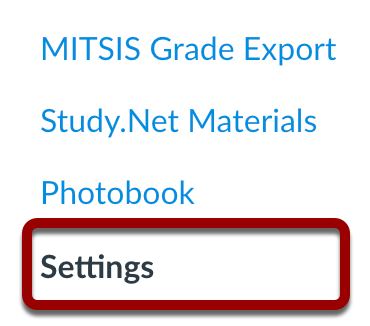
  1. In your Canvas course, click on Settings in the Course Navigation Menu.
    Click Settings
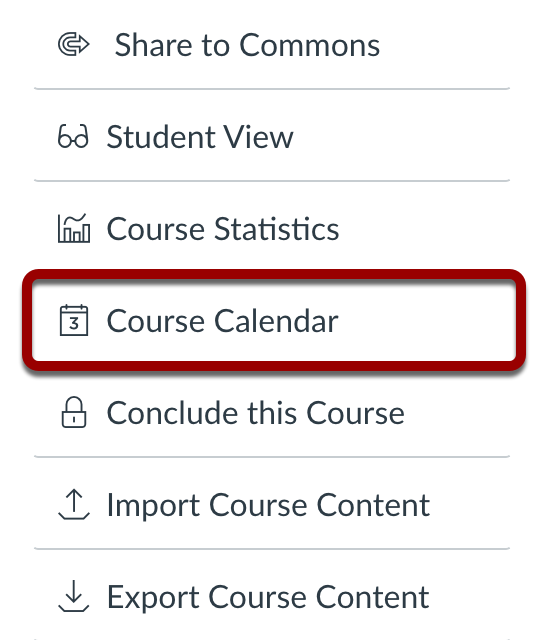
  2. Click on Course Calendar in the right-hand side bar.
    Click Course Calendar
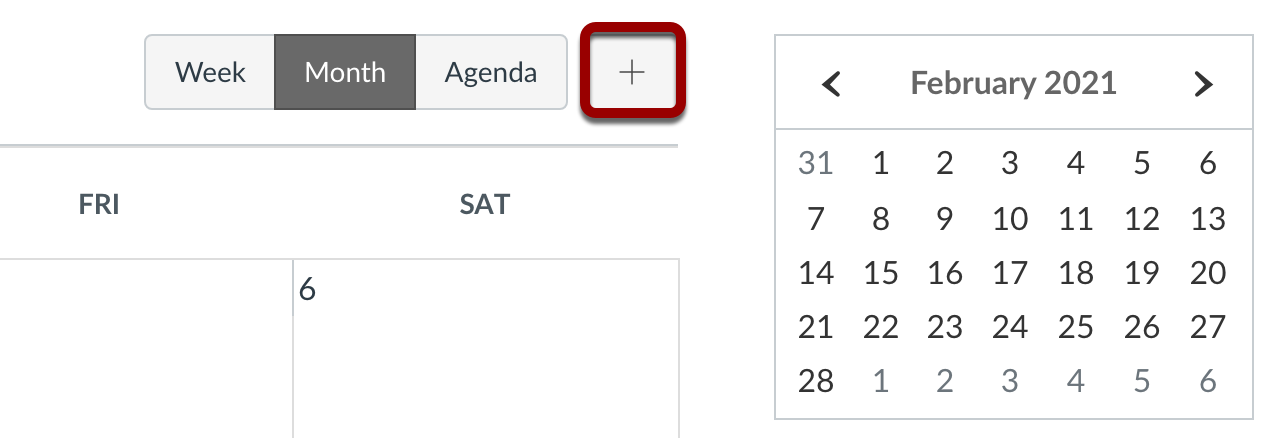
  3. Click the Add icon.
    Click Add Event button
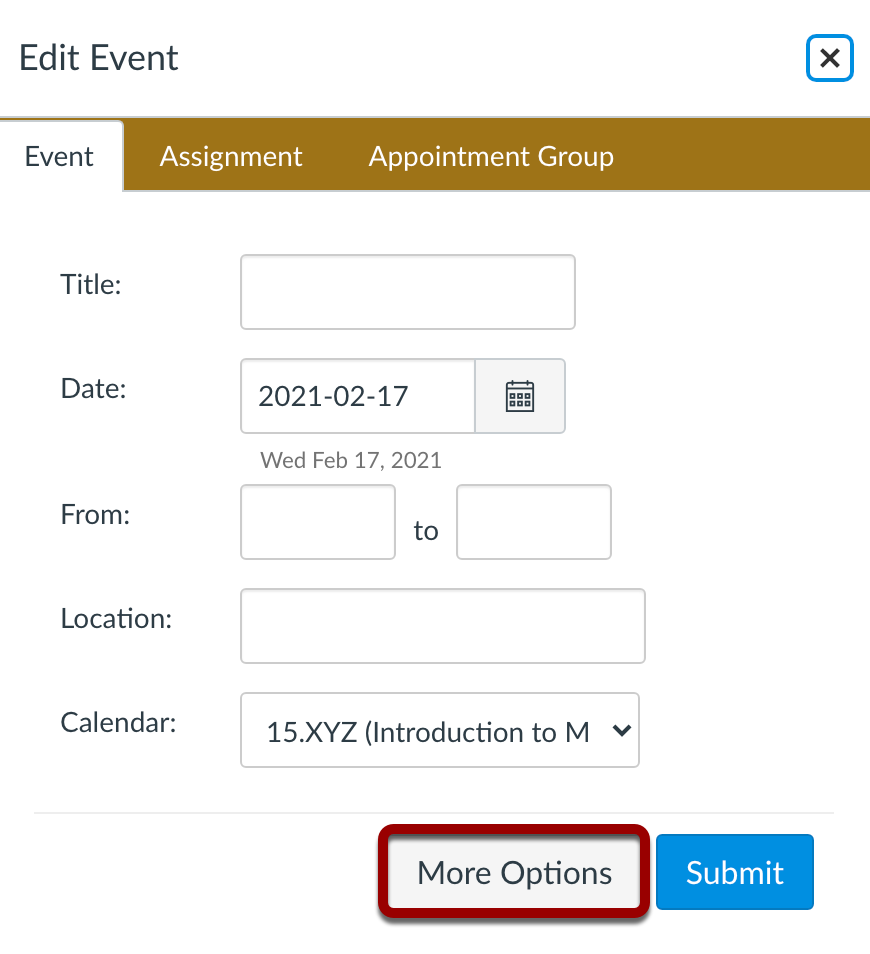
  4. On the Edit Event pop-up window, click the More Options button.
    Click More Options
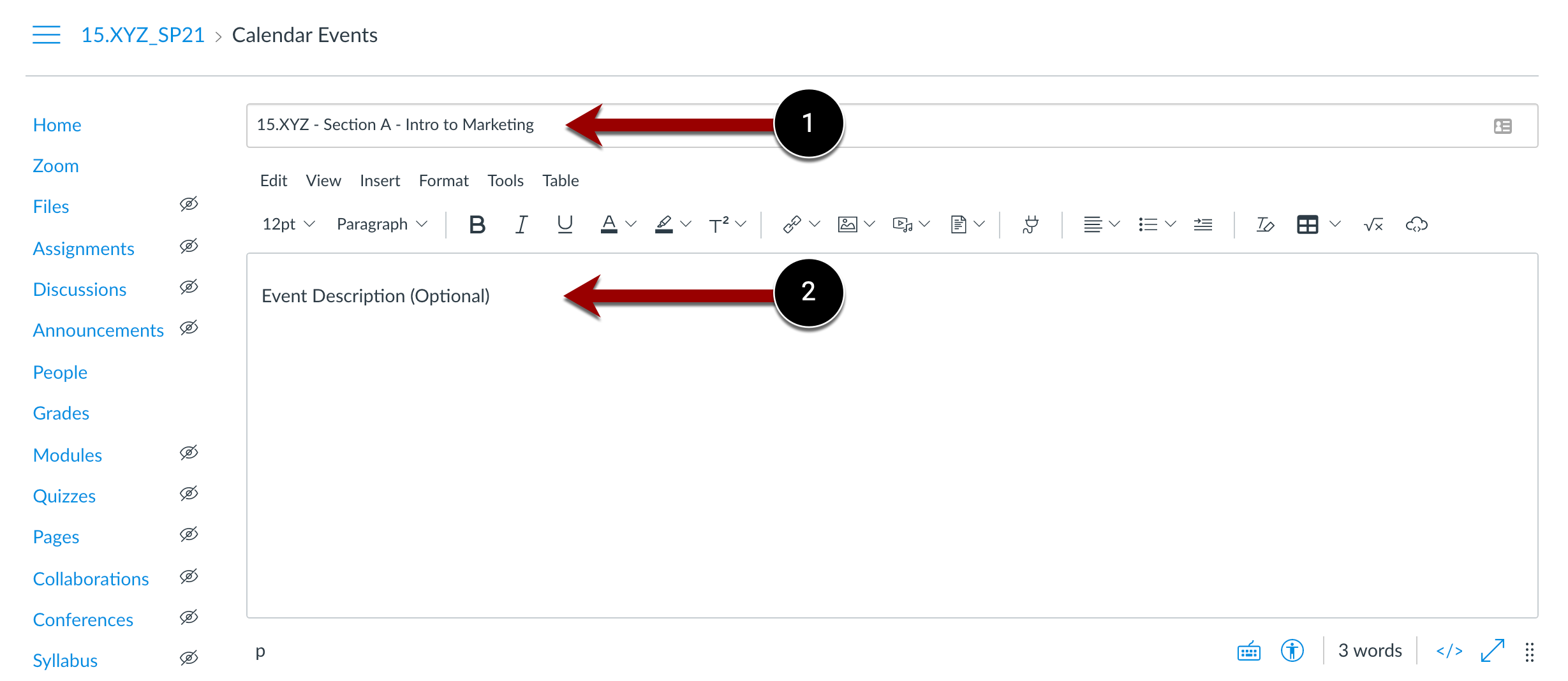
  5. Enter a title [1] and description (optional) [2] for the event.
    • Naming Conventions for Sloan courses: Course number – Event type – Term and year (e.g., 15.927 – Class Session – Spring 2026).
      Enter title and description
  6. Click the Use a different date for each section checkbox.
    Click Use a Different Date for Each Section
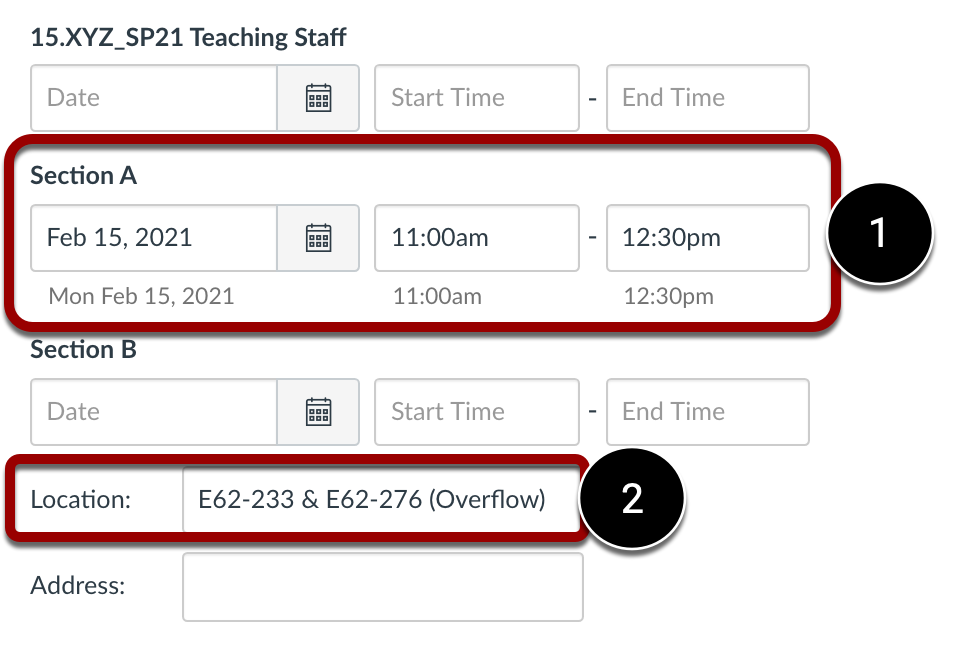
  7. Enter a date, time, and location:
    • Select the date and time [1]:
      • Click the Calendar icon to choose the date.
      • Enter the start and end time.
        Enter date and time location
      • IMPORTANT: If your Canvas site has multiple sections, only fill in the Date and Time fields for the section you are scheduling for. Leave all other sections blank.
    • Enter a location [2]:
      • If the section is remote, type Remote into the Location field [2].
        • IMPORTANT: Do NOT include Zoom meeting information in the calendar event. Students should access Zoom meetings from the Zoom app in Canvas. This ensures they have the correct link and are properly authenticated into the meeting.
      • If the section is in-person, type the room number into the Location field (e.g. E62-276) [2].
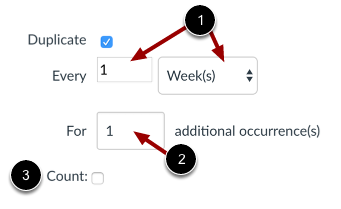
  8. To create a recurring event, use Duplicate to create the remaining class sessions for the term (optional):
    • Click the Duplicate checkbox.
      Click Duplicate checkbox
    • IMPORTANT: Confirm the repeat schedule [1], enter the number of additional occurrences [2], and leave Number each event unchecked (blank) [3].
      • By default, Canvas duplicates the event weekly [1]. Leave Week(s) selected (unless your class sessions follow a different cadence).
      • By default, Canvas creates one additional occurrence (two total events). In the Additional Occurrences field [2], enter how many additional class sessions you want Canvas to create for the term.
        • Example: If you want 14 total class sessions, enter 13 into the Additional Occurrences field [2],
          Enter duplicate details
    • Note: You can create a series of events at once using Duplicate, but after they’re created, you can only edit or delete them one at a time.
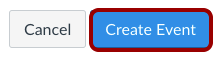
  9. Click the Create Event button.
    Click Create Event
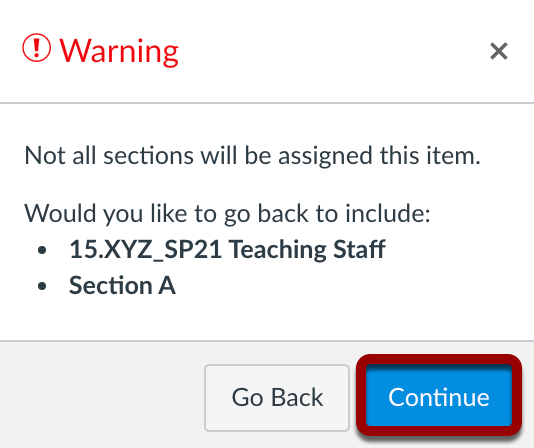
  10. On the Warning dialog box, click Continue.
    Click Continue
  11. Repeat Steps 1-10 for each unique recurring event.
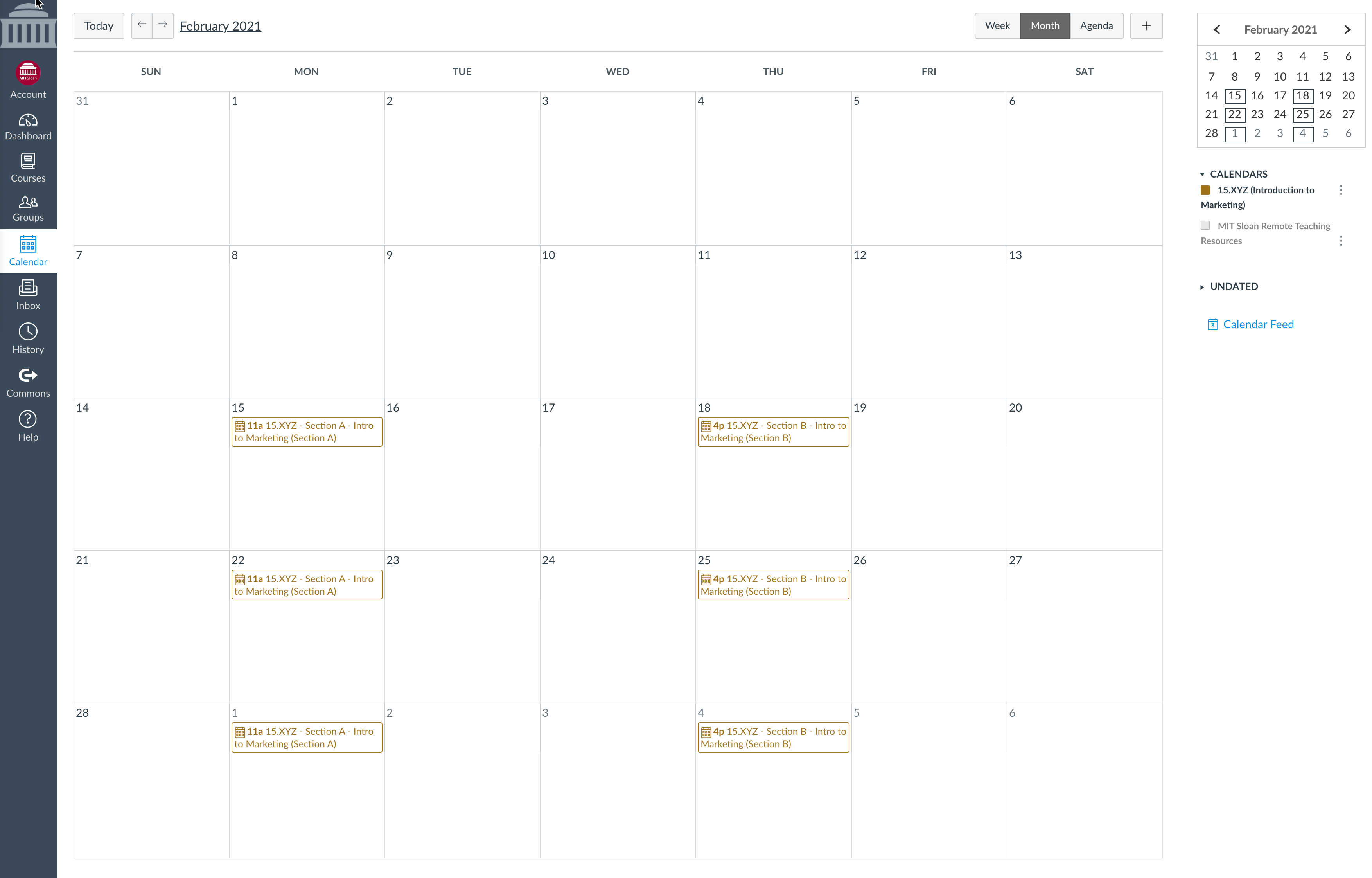
  12. View the events in your Course Calendar or the Syllabus tool and confirm that all class sessions are correct, including any holiday adjustments. Each section in your Canvas site will have its own calendar event(s), and you can delete or edit individual events as needed.
    Review Calendar Events

How to Edit or Delete Calendar Events

If you need to update or delete an individual event on your Course Calendar, see How do I edit or delete an event or assignment in the Calendar? for step-by-step instructions.